Call Us
  Schedule Consultation





A More Complete View of Your Shape
Lipo 360 is designed for people who want their entire midsection to look balanced from every angle.
The procedure considers how the abdomen, waist, flanks, and back connect, giving Dr. Joseph T. Cruise the ability to shape a smoother, more defined silhouette.
For patients considering Lipo 360 in Orange County, Dr. Cruise builds each surgical plan around the body in front of him. He will explain where fat can be removed safely, how your skin is likely to respond, and what kind of change will complement your natural curves.


Lipo 360 is a circumferential approach to traditional liposuction.
Traditional liposuction may focus on a single concern, such as the lower abdomen or one set of love handles. Lipo 360 coordinates fat removal across multiple areas of the torso so the contours flow together from the front, sides, and back.
The term “360” describes the treatment strategy of going fully around the abdomen for more balanced, even results. Dr. Cruise typically uses tumescent liposuction, introducing a specialized solution into the fatty layer before removing excess fat through small incisions with a slender cannula. Careful blending between treatment areas helps refine the waist and enhances natural curves without creating abrupt changes in shape.
Most Lipo 360 plans address the upper and lower abdomen, waist, flanks, and areas of the back that contribute to fullness around the midsection.
Treatment may extend toward the hips, lower back, or bra line when those areas affect the overall contour. Dr. Cruise will determine which areas should be included after examining how your fat is distributed.
Lipo 360 treats fat beneath the skin. Loose skin and separated abdominal muscles require different forms of correction. If either concern is a significant part of your anatomy, Dr. Cruise may discuss a tummy tuck or another body-contouring procedure.
For the right patient, the benefits of Lipo 360 may include:

Ideal candidates are healthy adults who are near a weight they can maintain and have localized fat around the midsection. These pockets may remain visible despite a consistent diet and regular exercise. Good skin elasticity is helpful because the skin needs to adapt to the refined contour beneath it.
Candidates should have realistic expectations about what surgery can achieve. Lipo 360 is intended to sculpt the body and improve proportion. It is not a substitute for weight loss or a healthy lifestyle.
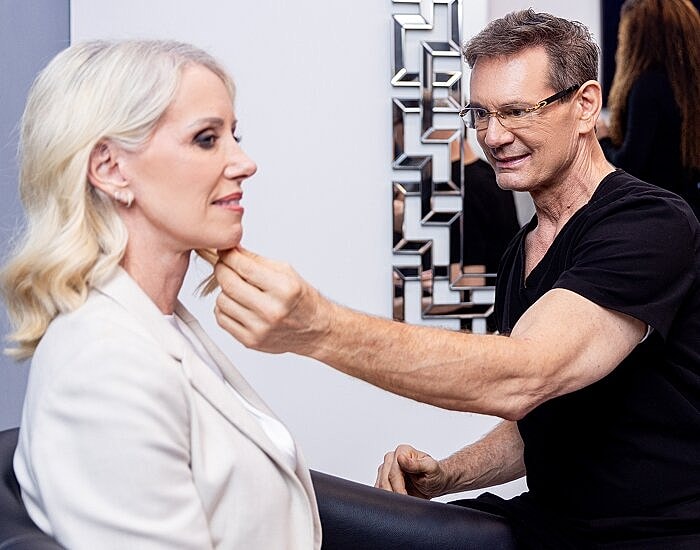
Your consultation includes a review of your medical history, medications, previous surgeries, and goals. Dr. Cruise will examine your skin quality and the amount and location of fat throughout your torso before determining if the procedure is right for you.
Who Should Wait?
Dr. Cruise may recommend postponing surgery if your weight is changing, you are pregnant or planning a pregnancy soon, or a medical condition could interfere with anesthesia or healing. Individuals with substantial loose skin may need a different procedure to achieve the shape they want.
Smoking raises the risk of healing problems and visible scarring. If you smoke or use nicotine, you must be prepared to stop for the period Dr. Cruise recommends before and after surgery.
Lipo 360 is typically performed under general anesthesia at an accredited outpatient facility. Dr. Cruise begins by marking the treatment areas while you are standing, allowing him to assess the torso from every angle. Once surgery begins, tumescent fluid is placed into the fatty layer. Small incisions provide access for the cannula used to loosen and remove fat.
Dr. Cruise works around the abdomen, waist, flanks, and back according to the surgical plan created during your consultation. The amount of fat removed is guided by safety, balance, and the quality of the surrounding tissue. If the amount of excess fat or the number of areas is too extensive for one procedure, staged treatment may be recommended.
Swelling, bruising, soreness, and temporary firmness are expected during the early recovery period. Wearing compression garments provides support to the treated areas and helps manage swelling as your body heals.
Light walking begins soon after surgery to support circulation. Many patients return to desk-based work and other light activities within one to two weeks. Exercise, heavy lifting, and strenuous activity remain limited until Dr. Cruise determines that your recovery has progressed far enough.
You will receive instructions for compression garments, incision care, medications, bathing, activity, and follow-up appointments. Being prepared at home and following these directions closely can support a smooth recovery.
Your midsection will begin to look different as the initial swelling subsides. Changes usually become easier to see over several weeks, with the contour continuing to refine for a few months as the tissues soften and settle. Final results develop at a different pace for every patient.
Fat cells removed during Lipo 360 do not grow back. Remaining cells can still expand with weight gain, so maintaining a stable weight through a healthy diet and regular exercise is essential for optimal results. Aging and changes in skin elasticity can also affect the body over time.
The cost of Lipo 360 depends on the number and size of the areas treated, the complexity of the procedure, anesthesia, and facility fees. Because each plan is developed for the individual, an accurate quote requires an in-person assessment. Cruise Plastic Surgery will provide detailed pricing after your consultation.
Lipo 360 requires a surgeon to understand how each treatment area affects the next. Removing fat from the abdomen alone can leave the waist or back looking disconnected. A complete approach requires careful planning, measured fat removal, and attention to the way your body looks while standing, turning, and moving.
Dr. Cruise is a board-certified plastic surgeon with more than 20 years of cosmetic surgery experience. He uses tumescent liposuction and a range of cannulas to adapt the procedure to different tissue qualities and areas of the body. His recommendations are direct and anatomy-based, including when liposuction alone is unlikely to produce the result you have in mind.

Below are some common questions asked by prospective mommy makeover patients.
No. Lipo 360 removes localized fat to improve contour and proportion. Candidates should be close to a stable weight before surgery.
Skin with good elasticity may contract around the smaller contour as swelling subsides. Significant excess skin may require a tummy tuck or another lifting procedure.
The fat-removal method is still liposuction. Lipo 360 refers to a broader strategy that treats connected areas around the entire midsection rather than concentrating on one isolated concern.
Lipo 360 can sometimes be included in a more extensive body-contouring plan. The safest approach depends on your health, treatment areas, surgical goals, and the total recovery involved.
Possible risks include bleeding, infection, fluid accumulation, changes in sensation, contour irregularities, asymmetry, poor wound healing, blood clots, anesthesia complications, and the need for revision surgery. Dr. Cruise will discuss the risks connected to your individual plan before you decide to proceed.